AI & Tools / Field note
A useful content review workflow with Claude
Turn a page review into a clear set of evidence-backed suggestions, with the original copy and the final decision kept visible.
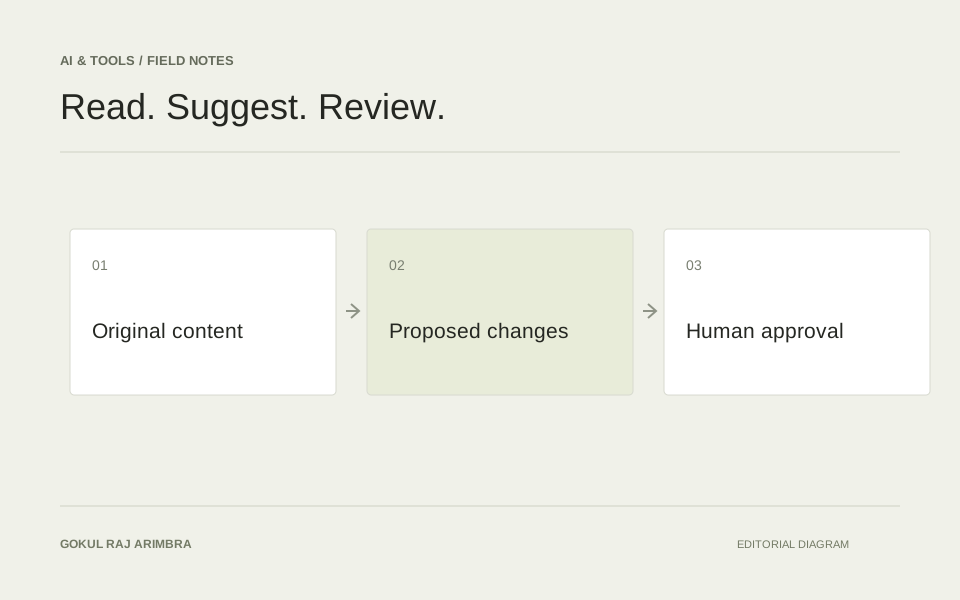
A content review becomes more useful when it produces decisions someone can understand. A completely rewritten page may read smoothly while quietly changing a product claim, removing an important qualification or introducing a promise the business cannot keep.
For a Claude-assisted review, I would start with a narrower task: identify the problems, propose specific edits and explain what each edit improves. The result should make the editor's job clearer, with the original information close at hand.
Give the review a real brief
Supply the page copy, its audience, its purpose and the facts that must remain intact. A product page for a refurbished laptop has different requirements from an agency introduction. Condition, compatibility and what is included may matter more than adding personality to the headline.
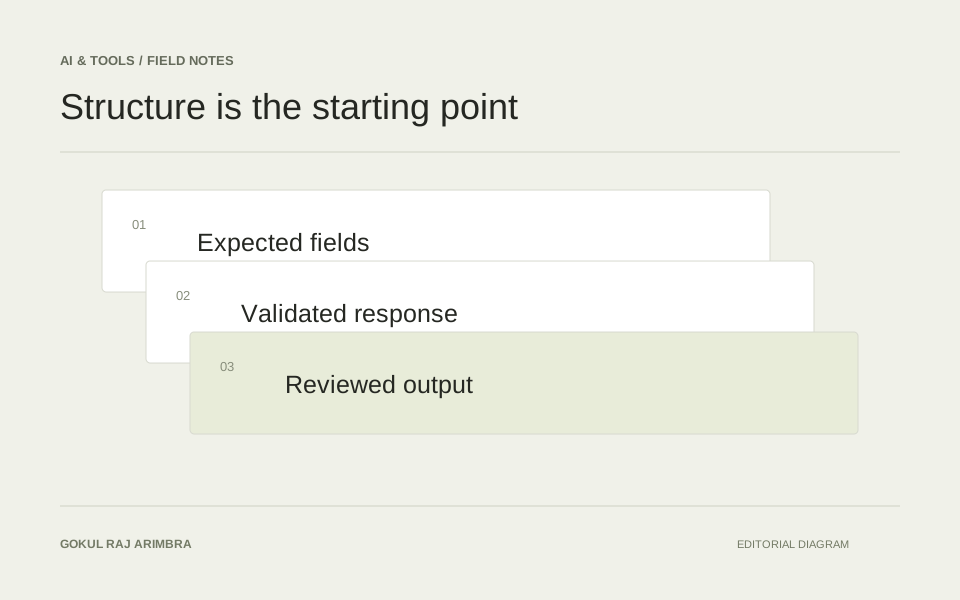
Separate the inputs into labelled sections: source copy, verified facts, writing rules and requested output. Anthropic's prompting guidance recommends clear instructions, examples and structured boundaries between different kinds of context. These are useful foundations for a repeatable review. Claude prompting best practices.
Include one approved edit and one rejected edit if you have them. Explain the difference. A previous rewrite rejected for inventing a delivery promise teaches a more useful boundary than a vague instruction to make everything better.
Ask for changes you can inspect
Request a review table with five fields: original passage, issue, suggested replacement, reason and facts requiring confirmation. Keep the replacement focused on the issue. If the heading is unclear, the model should not need to rewrite the entire page to repair it.
For example, an instruction might be: review this collection introduction for clarity and repetition; preserve the verified product facts; flag unsupported claims; suggest concise replacements; leave accurate, useful passages alone. This defines the work without prescribing a particular creative voice.
A suggestion such as changing “Explore our amazing solutions” to “Compare laptop repair options” has an inspectable purpose. It names the action and the subject. A suggestion to describe the service as the fastest in the region needs evidence before it belongs anywhere near the published page.
Separate editorial judgement from missing information
A model cannot resolve every content problem from the supplied copy. If the page does not explain which accessories are included, the useful output is a question for the product owner. A confident sentence assembled from assumptions makes the page harder to trust.
Give reviewers three decisions: accept, edit or reject. Keep unresolved factual questions separate from stylistic suggestions. A page can be ready for a tone adjustment while still waiting for a factual answer, and the interface should make that distinction obvious.
Check the review against a small sample
Before using the workflow across a large content set, try several different pages: one already strong, one repetitive, one incomplete and one with an unsupported claim. Check whether the review leaves good copy alone, catches the real issue and avoids creating new ones.
Keep a short record of accepted and rejected suggestions. Repeated rejection patterns tell you whether to change the instructions or the source material. The useful measure is how much accurate, reviewable work reaches the editor, followed by a clear decision about what gets published.