Experience / Field note
An experimentation practice starts with better questions
An experiment should make an uncertainty easier to understand.
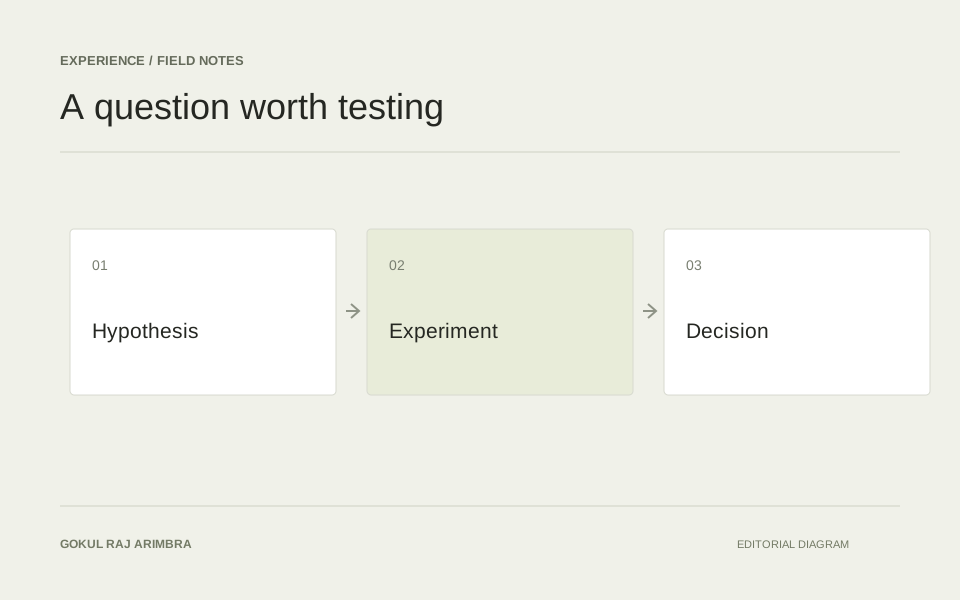
An experiment should make an uncertainty easier to understand. A long list of possible changes is less useful than a clear question and a reason to investigate it.
Write the hypothesis plainly
Describe the observed problem, the proposed change and the behaviour you expect to influence. Keep assumptions separate from observations. A hypothesis that can be discussed in ordinary language is easier for people across design, development and marketing to challenge.
Keep a decision record
Record the version being evaluated and any relevant changes happening alongside it. Define the signals you will look at before interpreting the outcome. Avoid treating every movement in a report as proof that the design caused it.
Carry the learning forward
Write down what the investigation supports, what remains uncertain and what should happen next. A useful experiment can reveal that the original question was too broad or that the measurement needs attention. The value of the practice is the quality of the decisions it supports over time.