Search / Field note
Designing a search experience around the catalogue
Search quality starts with a clear understanding of the products and the language people use to find them.
Search quality starts with a clear understanding of the products and the language people use to find them. Before choosing a search tool, I would write down the searches the interface needs to handle: product names, model identifiers, categories and descriptive phrases.
Start with a small reference set
Collect representative queries and describe what a useful result would look like for each one. Include a misspelling, an exact identifier, an ambiguous phrase and a search that should return nothing. This gives the team a shared way to discuss relevance without relying on a single impressive demonstration.
Make the index understandable
A search index should reflect meaningful fields in the catalogue. Treat the product title, category and identifiers as different information, then document how each should behave. Typesense has specific guidance for identifiers and other structured data; those choices deserve deliberate configuration rather than one rule for every field.
Design the whole interaction
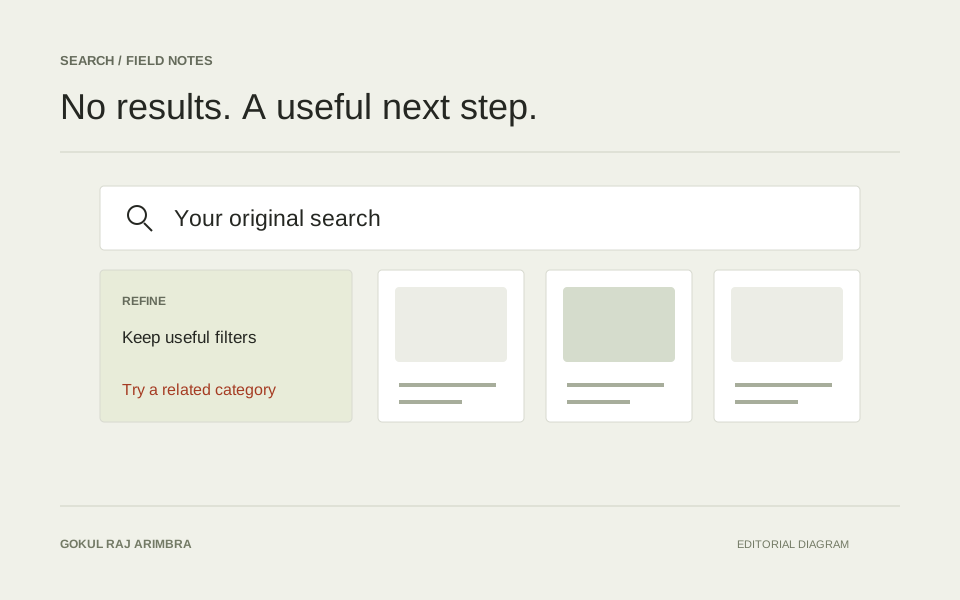
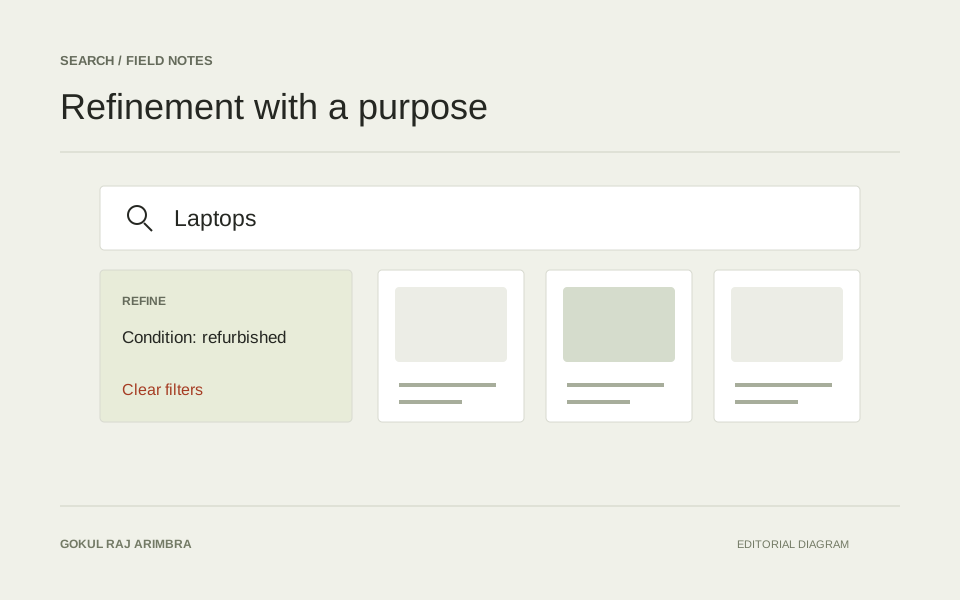
The results are only part of the experience. A useful interface also preserves the query, makes filters visible and offers a sensible next step when no match is found. Keep the data synchronisation and the storefront interaction understandable enough that another developer can maintain both.
Further reading: Official documentation.