Marketing / Field note
An AI-assisted creative review for Meta ads
Review the connection between the creative, the offer and the destination page before turning variations into an advertising test.
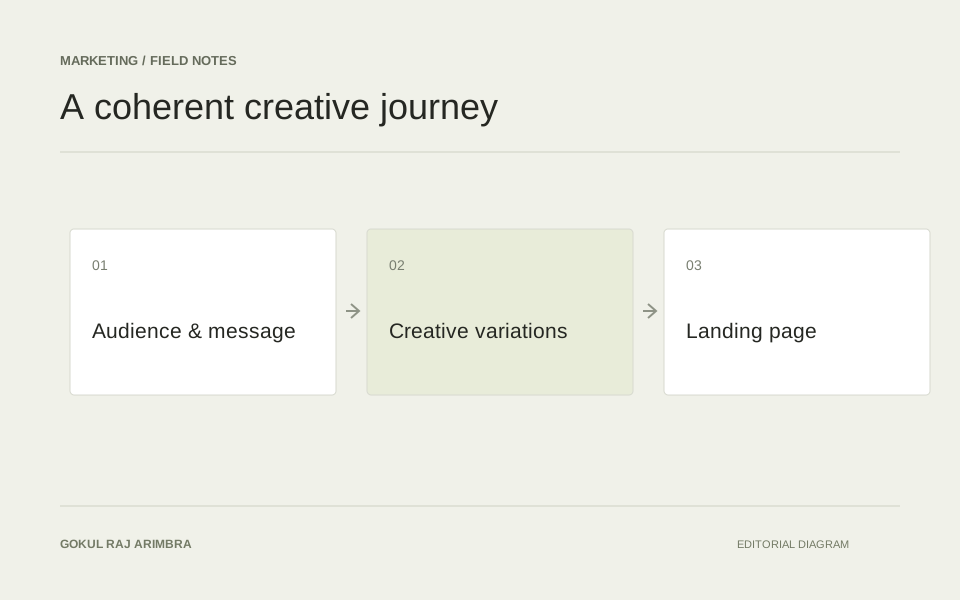
A creative review should explain what an advert communicates and whether the destination fulfils that promise. Generating another set of headlines is only a small part of the work. The more useful task is finding mismatches before they become part of a campaign.
An AI-assisted review can organise that work into a clear set of questions. What is the offer? Who is it for? Which details are supported by the product or service information? What might become hard to understand in the intended placement?
Review one creative package at a time
Bring together the image or video, primary copy, headline, call to action and landing-page reference. Include the audience context and the confirmed offer. A draft that looks sensible in isolation can become confusing when it is paired with a different product page or an expired promotion.
Give each package an identifier. If the headline changes later, the review should still make it clear which version was checked. Keep the source assets available alongside the model's observations rather than relying on a text summary of what they contain.
For a fictional furniture promotion, the package might include a chair photograph, a delivery message and the matching product page. The review should check whether the message applies to that item, rather than assuming that the store's general delivery statement covers every product.
Separate message checks from format checks
Message checks focus on meaning: a clear subject, a supported claim, a useful action and a consistent offer. Format checks focus on presentation: readable text, complete imagery and whether important details remain visible in the placement preview.
Check current placement requirements in Meta's own guidance before preparing the final assets. Its Reels resources cover creative presentation and placement considerations; an internal review checklist should stay connected to those current specifications. Meta's Facebook and Instagram Reels guidance.
Avoid asking a model to certify that an advert will be approved or perform well. A content review can identify a question worth checking, but it does not replace the platform's review process or the evidence from a properly designed campaign test.
Request a useful review output
Ask for the issue, the exact asset or passage involved, the reason it matters and a suggested revision. Keep factual questions separate from stylistic suggestions. A possible delivery mismatch needs an answer from the business; a repetitive opening line may only need an edit.
A helpful review item might say that the creative shows several accessories while the supplied product description includes only the main item. The next step is to confirm the intended presentation and make the offer clear. Inventing an inclusion statement would make the problem worse.
Turn approved changes into a deliberate test
Once the creative is accurate and readable, decide which idea the test is meant to explore. Changing the image, offer, copy and destination together makes it harder to explain the result afterwards.
Keep a short record of the hypothesis, the approved assets and the outcome you will review. The AI workflow can prepare the comparison and organise the evidence, while the campaign owner decides what is ready to run. The result is a clearer creative process, with fewer unresolved questions hidden inside a polished advert.